Exploring the Impact of Pressure on Process Temperature Control
Understanding Process Temperature Control
The Importance of Temperature Measurement
Temperature measurement stands at the forefront of process temperature control, serving as a critical parameter in a variety of industrial applications. Precise temperature regulation ensures product quality, optimizes energy consumption, and maintains safety standards across operations. In industries such as food processing, pharmaceuticals, and chemicals, temperature plays a vital role in influencing reactions, preservation, and overall product integrity. Accurate temperature measurement facilitates timely adjustments, preventing deviations that could lead to inefficiencies or hazardous conditions. As such, implementing reliable temperature sensors becomes essential, with options like thermocouples and infrared devices gaining popularity for their responsiveness and precision.
Overview of PID Control Systems
PID control systems represent a cornerstone in temperature regulation, utilizing a three-term control algorithm—Proportional, Integral, and Derivative—to maintain desired temperature levels. This method adjusts the heating or cooling output based on the difference between the measured temperature and the setpoint. The proportional term responds to the current error, the integral term addresses past errors, and the derivative term predicts future errors, ensuring a balanced and responsive control action. The effectiveness of PID controllers in achieving stable temperature conditions makes them widely adopted in process controls. Their ability to minimize overshoot and oscillation enhances the stability and efficiency of industrial temperature controls.
Types of Temperature Sensors: Thermocouples and Infrared
Choosing the right temperature sensor significantly impacts the effectiveness of a process temperature controller. Thermocouples, for instance, utilize the thermoelectric effect to generate voltage proportional to temperature differences. Their wide measurement range and durability make them suitable for extreme environments. On the other hand, infrared sensors provide non-contact temperature measurement, ideal for moving objects or hazardous materials. By detecting infrared radiation emitted from an object, these sensors deliver rapid readings without physical contact, minimizing disruption to processes. Understanding the strengths and limitations of each sensor type helps in selecting the best solution for specific applications, ensuring accurate temperature measurement and control.
The Role of Pressure in Temperature Control
How Pressure Affects Temperature Regulation
Pressure plays a significant role in temperature control, particularly in processes where phase changes occur, such as boiling or condensation. The relationship between pressure and boiling point illustrates this principle clearly; increasing pressure raises the boiling point of liquids, while decreasing pressure lowers it. Consequently, operators must account for ambient and process pressures when setting temperature control parameters. Failing to do so can lead to inefficient thermal management and compromised product quality. Understanding how pressure influences thermal dynamics allows for more precise adjustments in process temperature controllers, ultimately enhancing operational efficiency and safety.
Pressure Measurement Techniques
Accurate pressure measurement is essential for effective temperature control. Various techniques exist, such as piezoelectric sensors, strain gauge sensors, and capacitive pressure transducers, each offering unique advantages. Piezoelectric sensors excel in dynamic pressure measurements, while strain gauge sensors provide high accuracy for static pressures. Selecting the appropriate measurement technique depends on the specific application requirements, including the range of pressures to be monitored and the operational environment. Integrating reliable pressure measurement solutions into temperature control systems ensures that operators can maintain optimal conditions, avoiding potential complications arising from pressure fluctuations.
Influence of Humidity on Temperature Control
Humidity significantly impacts temperature control, particularly in processes sensitive to moisture levels. High humidity can lead to heat transfer inefficiencies, affecting the overall performance of heating or cooling systems. In applications such as drying or coating, maintaining specific humidity levels is crucial for achieving desired results. Temperature controllers must therefore be capable of compensating for humidity variations to ensure consistent performance. Advanced systems may integrate humidity sensors, allowing for real-time adjustments to temperature settings based on moisture levels. This adaptability enhances the precision of process temperature controllers, ensuring optimal product quality and operational efficiency.
Technological Solutions for Process Temperature Control
Exploring PID Controller Options: 16 DIN vs. 32 DIN
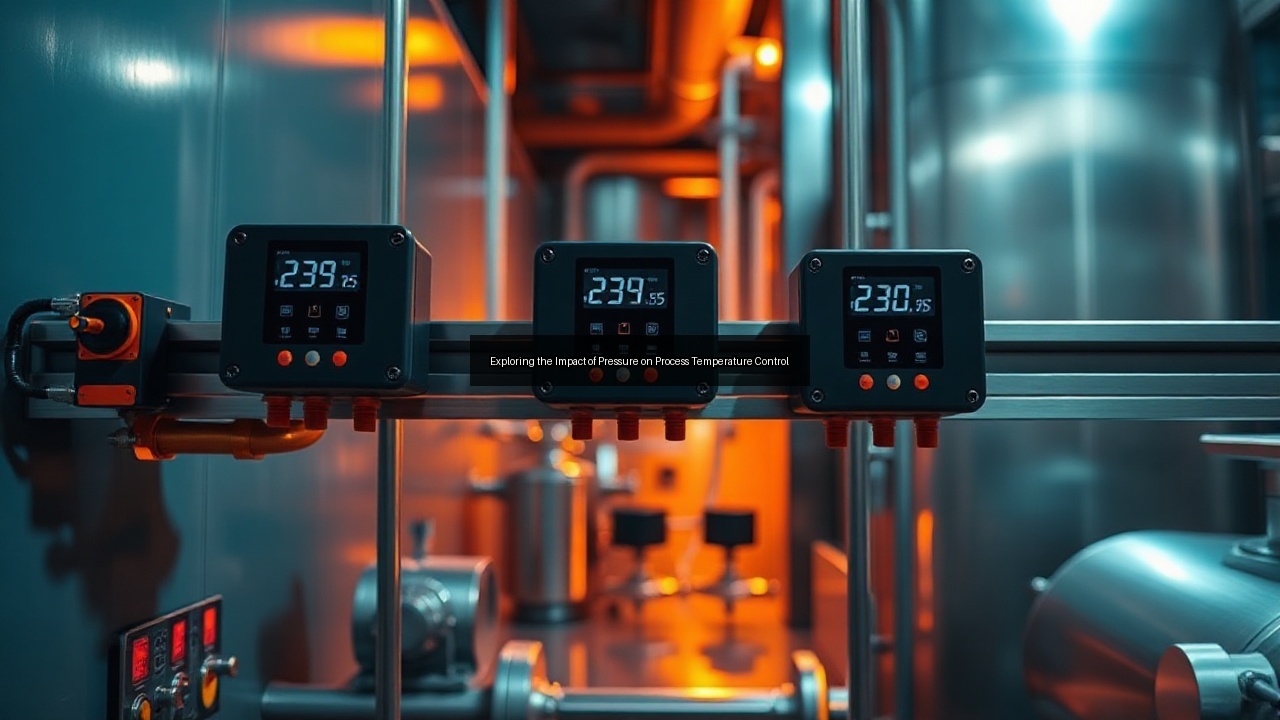
When selecting a process temperature controller, understanding the differences between 16 DIN and 32 DIN options is crucial. DIN rail-mounted controllers, designed for ease of installation in control panels, come in various configurations. The 16 DIN controllers typically offer essential features suitable for standard applications, including basic PID control functions and limited configurable inputs and outputs. In contrast, 32 DIN controllers provide advanced functionalities, allowing for more complex automation tasks and greater flexibility. They often include additional communication protocols, such as RS-485 and Modbus, facilitating integration into larger automation systems. Evaluating the specific needs of an application will guide users in choosing the right PID controller option to ensure effective temperature management.
Integrating RS-485 and Modbus for Enhanced Automation
Integrating communication protocols like RS-485 and Modbus into temperature control systems offers significant advantages for automation. RS-485 supports long-distance communication over twisted pairs, enabling multiple devices to connect on a single bus, making it ideal for industrial environments. Modbus, a widely adopted protocol, simplifies the communication between devices, allowing for seamless data exchange between controllers and monitoring systems. This integration enhances the ability to configure and monitor process temperature controllers remotely, improving operational oversight and efficiency. Utilizing these technologies also enables the development of sophisticated control strategies that can adapt to changing conditions, ensuring precise temperature management across various applications.
Choosing the Right Temperature Control Device for Your Needs
Selecting the right temperature control device involves assessing several factors, including application requirements, environment, and budget. Process temperature controllers come in various styles, including panel-mount, surface-mount, and DIN-rail options, each offering distinct benefits. Panel-mount controllers are ideal for direct display and control, while surface-mount devices provide flexibility in installation. DIN-rail controllers, particularly popular in industrial settings, offer compact solutions for complex control systems. Additionally, consider the required features, such as configurable inputs and outputs, communication capabilities, and compatibility with existing systems. Making an informed choice ensures that the selected temperature control device meets operational demands while providing reliable performance.
Best Practices for Calibration and Maintenance
Ensuring Accuracy in Temperature Measurement
Accuracy in temperature measurement is paramount for effective process temperature control. Regular calibration of temperature sensors and controllers is essential to maintain precision. Calibration involves comparing the readings of a device against a known standard and adjusting it to eliminate discrepancies. Implementing a routine calibration schedule ensures that measurement devices function correctly, minimizing errors that could lead to operational inefficiencies. Operators must also consider environmental factors that may affect sensor performance, such as electromagnetic interference or mechanical vibrations. By prioritizing accuracy through diligent calibration practices, facilities can enhance their temperature control systems' reliability and effectiveness.
Calibration Techniques for PID Controllers
Calibrating PID controllers requires a systematic approach to ensure optimal performance. Start by setting the controller to manual mode and adjusting the output to reach the desired temperature. Measure the actual temperature using a reliable sensor and record the difference from the setpoint. Utilize this information to fine-tune the PID parameters—proportional gain, integral time, and derivative time—until the system achieves stable control with minimal overshoot. Employing software tools for PID tuning can streamline this process, allowing for quick adjustments based on real-time feedback. Regularly reviewing calibration settings in response to process changes will help maintain accuracy and performance in temperature control.
Maintaining Precision in Industrial Temperature Controls
Maintaining precision in industrial temperature controls involves several proactive measures. Regular inspections of temperature sensors and controllers help identify wear or degradation before they affect performance. Cleaning sensors and ensuring proper installation prevents fouling and signal interference, which can lead to inaccurate readings. Operators should also monitor environmental conditions that may impact temperature stability, such as fluctuations in pressure or humidity. Implementing a maintenance log to track calibration and service activities aids in identifying trends that may require attention. By committing to thorough maintenance practices, organizations can ensure their temperature control systems operate with the highest precision, supporting overall process efficiency and product quality.